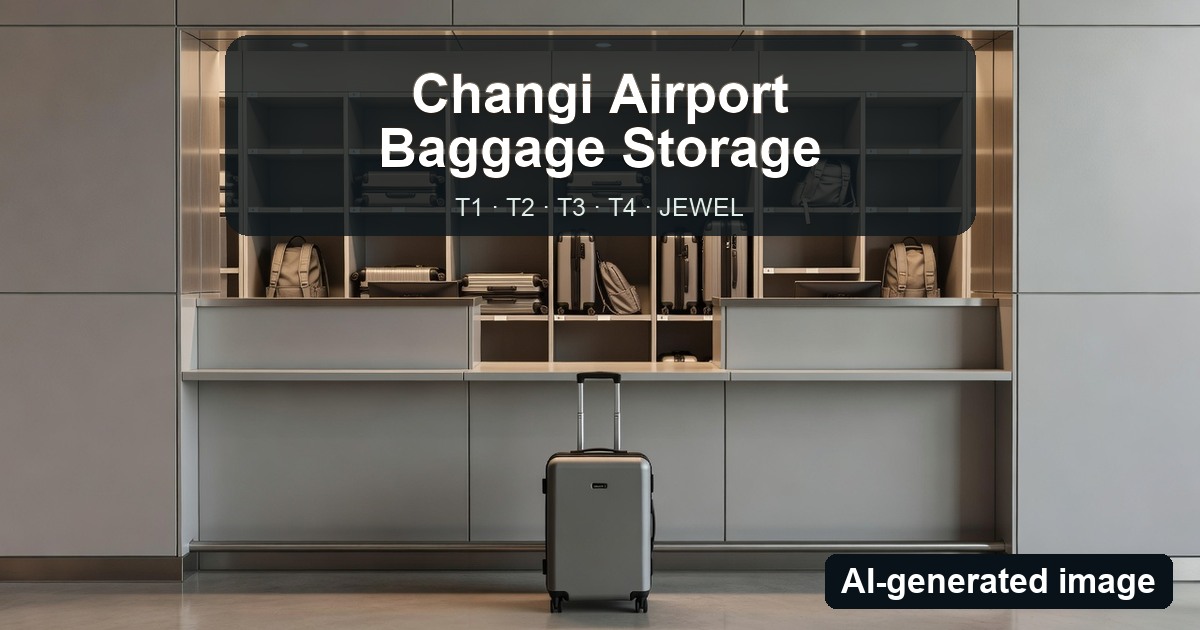
The first question at Changi Airport is not simply “Which terminal?” It is whether you can access a PUBLIC counter before security or a TRANSIT counter after outbound immigration.
As checked on September 20, 2026, Changi Airport’s official facility page separates four public locations from four transit locations. All eight are displayed as open 24 hours daily, and the ABOUT tab publishes GST-inclusive rates per 24 hours.
Decision order: choose the accessible passenger side → identify the nearest listed counter → confirm the weight/shape tariff → check restricted or unusual items and current capacity → work backward from collection time.
All images are AI-generated explanatory illustrations. They are not photographs, maps or real-time capacity evidence for Changi Airport.
Decision 1: can you use PUBLIC or TRANSIT?
PUBLIC area
Use this side after entering Singapore or before outbound security. The current directory lists:
- Jewel: Level 1, near the Early Check-In Lounge
- T2 Public: Level 1, Arrival Hall North, next to the Arrival North Taxi Queue
- T3 Public: Level 1, near the Train to City
- T4 Public: Level 1, near the T4–T2 Shuttle Bus
A landside passenger starting in Terminal 1 needs extra care. The current PUBLIC list does not display a separate T1 Public entry; it displays the Jewel location. Do not assume that a numbered T1 public counter is present. Check the Level 1 Jewel route or ask for current on-site guidance.
TRANSIT area
Use this side only if you are still beyond outbound immigration and have not entered Singapore.
- T1 Transit: Level 2, Departure Transit Hall West, near Guardian
- T2 Transit: Level 2, Departure Transit Hall North, beside Raffles Medical
- T3 Transit: Level 2, Departure Transit Hall, behind Maison De Chronus
- T4 Transit: Level 2M, next to Cheers
A passenger who has completed immigration and baggage claim cannot simply return to a transit counter. Conversely, leaving transit for a public counter can introduce immigration, entry-eligibility and re-screening constraints.
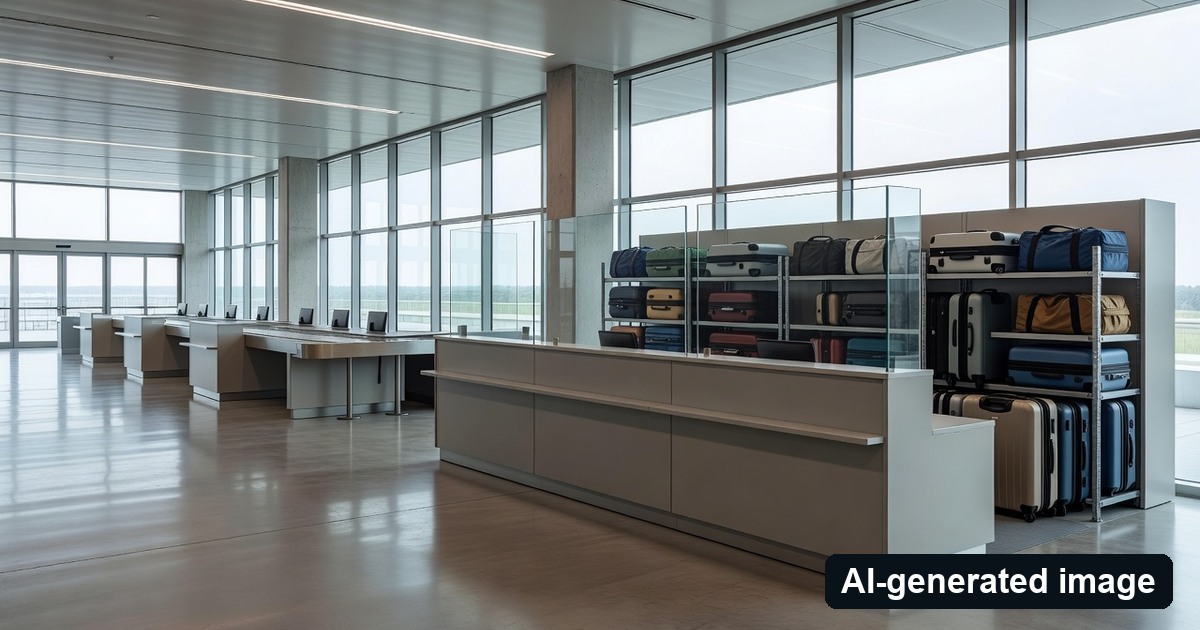
AI-generated image. It does not show Changi Airport’s real interior, counter position or security boundary.
Decision 2: separate a 24-hour listing from your time budget
The LOCATION tab displays Open 24 Hours · Daily for all eight listed counters. The FAQ also describes baggage storage as operating around the clock across the four terminals.
That does not guarantee:
- free space at a particular time;
- acceptance of an unusual item;
- a fixed inspection or transaction time;
- a short inter-terminal walk; or
- immigration and re-entry eligibility for a connecting passenger.
Even a nearby counter can be a poor choice immediately before boarding. Budget collection, any required security or immigration process, and the walk to the gate separately.
Decision 3: read the official 24-hour tariff literally
| Official class | GST-inclusive rate per 24 hours |
|---|---|
| Loose items | S$6 |
| Small items, below 10kg | S$11 |
| Big / odd-sized items, above 10kg | S$16 |
| Extra large-sized items | S$19 |
These are the classifications and rates displayed by the airport page. Let counter staff determine the final size and shape category, especially the boundary between Big / odd-sized and Extra large-sized. This guide does not convert a per-24-hour tariff into an hourly rate.
Decision 4: inspection and excluded-item boundary
The ABOUT tab says all stored bags or items are inspected as part of the security requirements. The FAQ says that the following are typically not allowed:
- flammable liquids;
- perishable goods;
- valuables such as jewellery; and
- important documents.
The FAQ also describes CCTV, pre-storage inspection, secure locks and restricted staff access. Those controls should not be rewritten as an unconditional loss or damage guarantee for passports, cash, electronics or valuables.
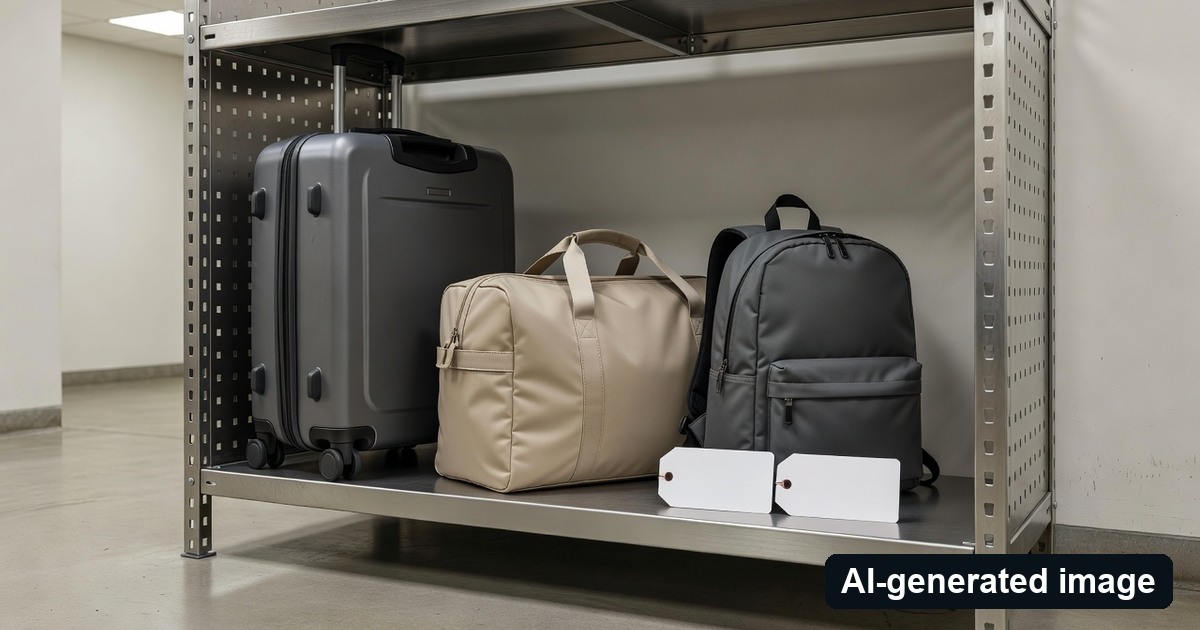
AI-generated image. The bags and blank tags are illustrative; they are not real claim tickets or a size specification.
Decision 5: walk-in use, long stays and unusual baggage
Ordinary use
The FAQ describes advance reservations as not typically required and the service as walk-in. It recommends contacting the operator for large groups or special requests. Walk-in service does not mean that capacity is guaranteed.
Extended storage
The FAQ frames the service around short-term needs and tells travellers to ask the baggage-storage service directly about longer-term arrangements. Do not treat a repeated multiplication of the public daily rate as confirmed long-term acceptance.
Oversized or irregular items
Unusual baggage may require special handling, available space and an additional fee. Contact the counter before travelling with a bicycle, sports equipment or another item that is materially different from a normal suitcase.
Route examples
Entering Singapore and visiting Jewel
Choose a PUBLIC counter. The directory lists the Jewel Level 1 counter. Work backward from the time you need to collect the bag and reach onward transport.
Waiting landside in T2, T3 or T4
Use the listed PUBLIC counter in the same terminal when it suits the onward route. Arrival Hall wording does not make that counter accessible to a passenger who remains in transit.
Connecting without entering Singapore
Choose TRANSIT. Confirm the next terminal and gate, then include any terminal transfer, connecting security process and collection time.
Starting landside in T1
The reviewed PUBLIC list does not state a separate T1 public counter. The bounded conclusion is only “not listed in the reviewed official directory.” Check Jewel Level 1 or current airport guidance. Directory absence does not prove permanent nonexistence.
Day-of-travel go/no-go check
- Choose the passenger side you can actually access: PUBLIC or TRANSIT.
- Confirm the listed level and nearby landmark.
- Ask staff to classify the bag by weight, dimensions and shape.
- Prepare for item inspection and keep valuables with you.
- Confirm current capacity and the total charge before paying.
- Protect the receipt or claim tag.
- Leave enough time to collect the bag and complete the next transport or boarding process.
The useful model is terminal + passenger side, not terminal alone. Separate the displayed 24-hour operation from capacity and unusual-item acceptance, and follow current on-site instructions if they differ from the directory.
A separate Korean search-answer edition is published on the Life Mokcha Naver Blog.
About the Author
Life Mokcha’s editor, “Mokcha Keeper,” separates airport-operator locations, tariffs and passenger-side access from variable on-site conditions. Recheck the official directory and counter guidance on the day of travel.