Korea’s 2026–27 National Immunization Program does not begin influenza vaccination for every eligible group on the same day. Children in the two-dose group and pregnant people start on September 21. Children in the one-dose group start on September 28, while adults aged 65 and older begin on staggered dates from October 12.
A major change this season is that the supported child age range extends through age 14. The child’s birth date and previous influenza vaccination history both matter, so age alone does not determine whether the one-dose or two-dose schedule applies.
Practical first step: Find the correct start date below, then use Korea’s Immunization Assistance website to locate a participating clinic. Confirm current hours and same-day availability with the clinic before travelling.
All images in this article are AI-generated editorial illustrations. They do not show an actual clinic, vaccine product, patient, vaccination procedure, or Korea Disease Control and Prevention Agency publicity material.
Start dates by eligible group
The program ends on April 30, 2027 for all groups listed below.
| Eligible group | Official criterion | Start date |
|---|---|---|
| Children: two-dose group | Age 6 months to under 9 years, with no previous influenza dose or only one previous dose | September 21, 2026 |
| Children: one-dose group | Other eligible children born January 1, 2012–August 31, 2026, excluding the two-dose group | September 28, 2026 |
| Pregnant people | Covered pregnancy group under the national program | September 21, 2026 |
| Age 75+ | Born on or before December 31, 1951 | October 12, 2026 |
| Age 70–74 | Born January 1, 1952–December 31, 1956 | October 15, 2026 |
| Age 65–69 | Born January 1, 1957–December 31, 1961 | October 19, 2026 |
The supported child birth-date range is January 1, 2012 through August 31, 2026. The senior program covers people born on or before December 31, 1961.
A simple way to find your date
- For a child, first check whether the birth date falls within the supported range.
- If the child is at least 6 months old but under age 9, verify the previous influenza vaccination record.
- For someone aged 65 or older, use the official birth-year bands rather than estimating from international age.
Do not choose one or two doses on your own. A clinic should verify the child’s record because the earlier start date is tied to both age and prior doses.
Children: why September 21 and September 28 differ
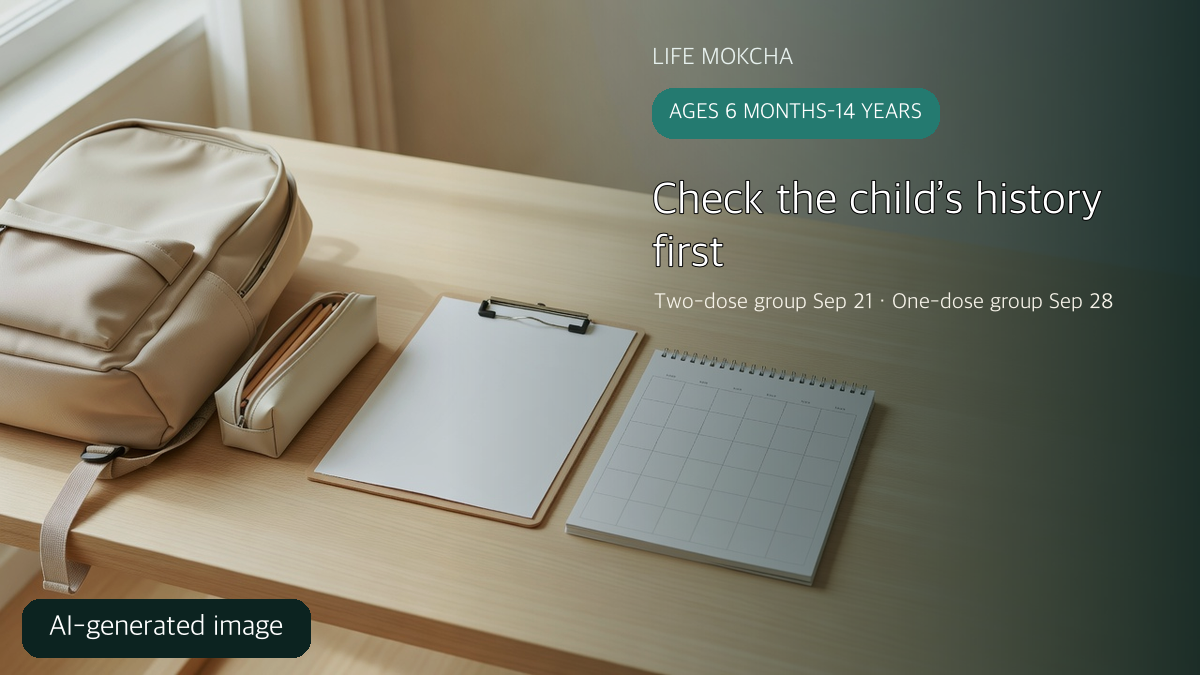
AI-generated editorial illustration. It does not depict an actual child or clinic.
Korea starts the two-dose child group on September 21 so those children have time to complete the required series before the main influenza season. The one-dose group begins one week later, on September 28.
The official two-dose definition combines both of these conditions:
- The child is at least 6 months old but under age 9.
- The child has no previous influenza vaccination history or has received only one previous dose.
Other eligible children born January 1, 2012–August 31, 2026, excluding the two-dose group, follow the one-dose start date. A birth date alone is not enough to classify the schedule; previous vaccination records must also be checked.
Pregnancy coverage starts September 21
The national influenza vaccination window for the covered pregnancy group runs from September 21, 2026 through April 30, 2027. This page summarizes the public program timetable only. Questions about an individual’s medical history, timing, or suitability for vaccination should be discussed with a healthcare professional.
Adults 65+: staggered dates reduce opening-day crowding
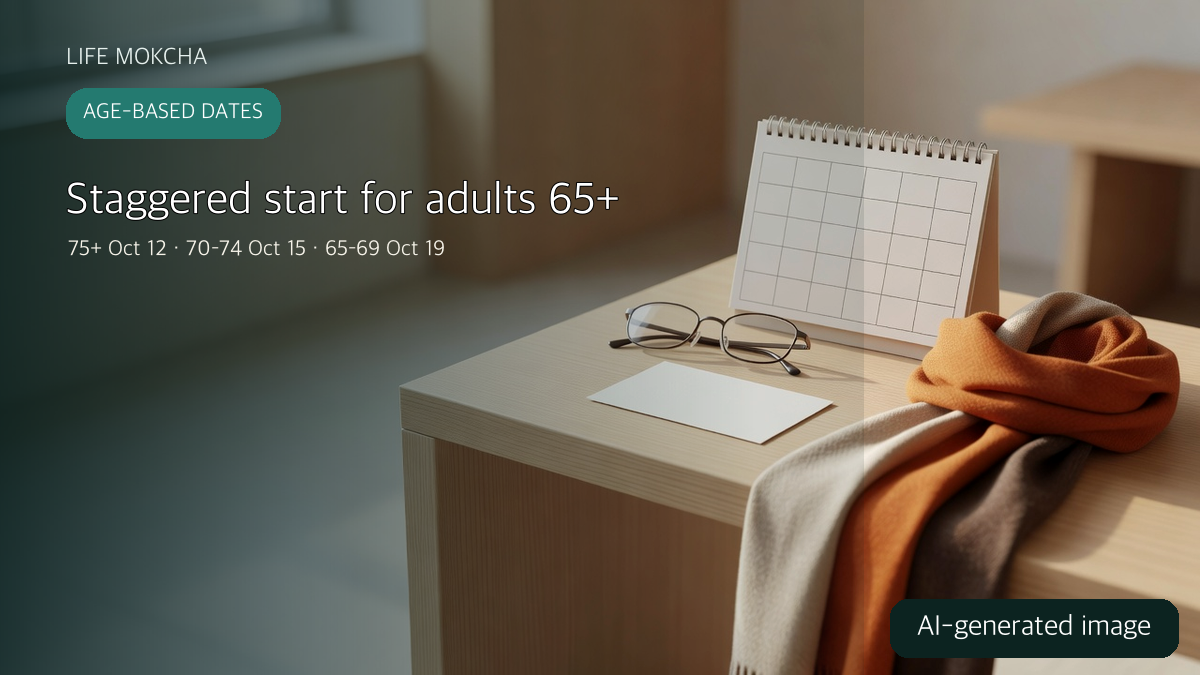
AI-generated editorial illustration. It does not depict an actual patient or clinic.
The KDCA separates the older-adult start dates to reduce early crowding and related safety risks.
- Age 75 and older: October 12
- Age 70–74: October 15
- Age 65–69: October 19
COVID-19 vaccination for adults 65 and older is scheduled to follow the same age-staggered sequence beginning October 12. KDCA guidance says influenza and COVID-19 vaccines may be administered at the same visit, using different injection sites.
Where to receive the supported vaccination
Eligible people may use a participating medical institution or public health center regardless of their home address.
- Search the Korea Immunization Assistance website for a designated provider.
- Confirm the eligibility group and official start date.
- Contact the provider to check operating hours and current availability.
- For a child, ask the provider to verify the previous influenza vaccination record.
People outside the national support groups can generally receive a paid influenza vaccination at a clinic that offers influenza vaccination. Some local governments operate additional support programs, so ask the relevant public health center whether a separate local benefit applies.
The national release defines the age and pregnancy groups but does not answer every registration or immigration-status question. If eligibility under a particular residence or registration status is unclear, confirm it with the clinic, public health center, or KDCA service before visiting.
What the vaccine can and cannot promise
The 2026–27 national program uses a trivalent vaccine containing the strains recommended by the World Health Organization for the season.
Vaccination does not prevent every influenza infection. KDCA’s FAQ says protective antibodies generally develop about two weeks after vaccination, and effectiveness varies with the match between the vaccine and circulating viruses as well as the individual immune response. Vaccination remains important because it can reduce the risk of severe disease and death in addition to preventing some infections.
Common post-vaccination reactions
The official FAQ lists redness and pain at the injection site as the most common reactions and says they generally resolve within one or two days. Seek medical advice rather than self-diagnosing if an unexpected or severe reaction occurs.
Before-you-go checklist
- [ ] Confirm the official birth-date or age criterion.
- [ ] For a child, prepare to verify previous influenza doses.
- [ ] Visit only after the start date for the relevant group.
- [ ] Find a designated provider through the official service.
- [ ] Confirm the provider’s hours and vaccination availability.
- [ ] Tell the clinician about relevant health conditions and questions.
Dates worth saving
- Two-dose child group and pregnancy group: September 21
- One-dose child group: September 28
- Age 75+: October 12
- Age 70–74: October 15
- Age 65–69: October 19
- Program end for all listed groups: April 30, 2027
A shorter Korean search-oriented version is available on Life Mokcha’s Naver Blog.
This article is a general guide to the national program schedule and is not personal medical advice. Check the latest KDCA, Immunization Assistance, and provider guidance before vaccination.
About the Author
The Life Mokcha editor turns Korean public-service notices into date, eligibility, and action checklists. Health coverage is based on primary public-health sources; individual symptoms, underlying conditions, and vaccination suitability should be assessed by qualified healthcare professionals.