
On the morning of 18 September 2026, a shark more than three metres long was reported in a channel at the North Port waterfront park in Dong-gu, Busan. Reports of sightings continued on the following day and on 20 September. The urban location, close to a public promenade, drew attention—but the verified facts are narrower than the frightening headlines.
Current assessment: Korea’s National Institute of Fisheries Science tentatively identified the brown, roughly 3–4 metre shark as a bronze whaler. It was not reported captured and no attack or human injury has been confirmed. It is also unknown whether all three days’ sightings involved the same animal.
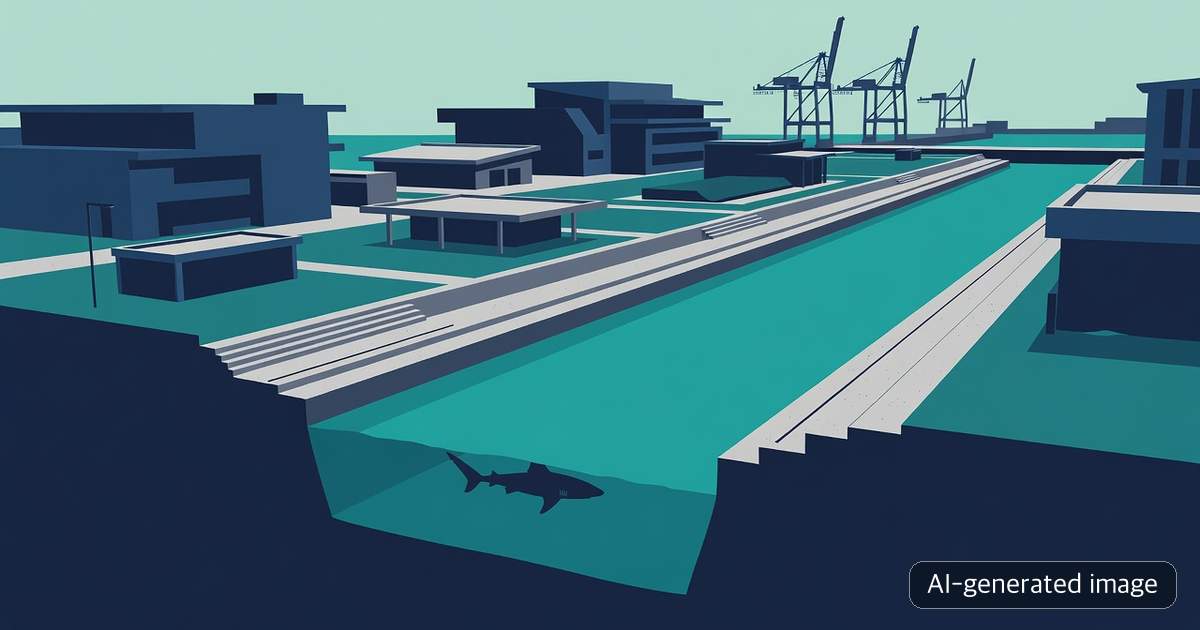
AI-generated explanatory illustration. It is not a photograph of Busan North Port or the animal involved.
Timeline
| Time | Confirmed report | Source |
|---|---|---|
| About 08:57, 18 Sep | First report in the North Port waterfront channel; brown, about 3–4 m; tentatively a bronze whaler | HelloTV field report and SBS follow-up |
| 18 Sep | Coast Guard vessels, a special rescue unit and deterrent equipment attempted to guide it offshore | HelloTV and SBS |
| 18 Sep | Active guidance stopped after fisheries experts warned that forceful pressure could trigger aggression | SBS |
| About 13:05, 19 Sep | Another report in the same channel; Busan sent a safety alert | SBS |
| 20 Sep | A field photo report described an approximately 3.5 m brown shark observed for a third day | Newsis |
Why was it monitored rather than captured?
The Busan Coast Guard initially tried to guide the animal toward open water. According to SBS, the National Institute of Fisheries Science advised that forceful efforts could provoke aggressive behaviour. The active operation was halted and authorities monitored the shark while allowing it to leave on its own.
That does not mean public safety was ignored. It reflects the risk of stressing a large wild animal inside a constrained channel. Busan issued a safety text alert to nearby residents and park users on 19 September.
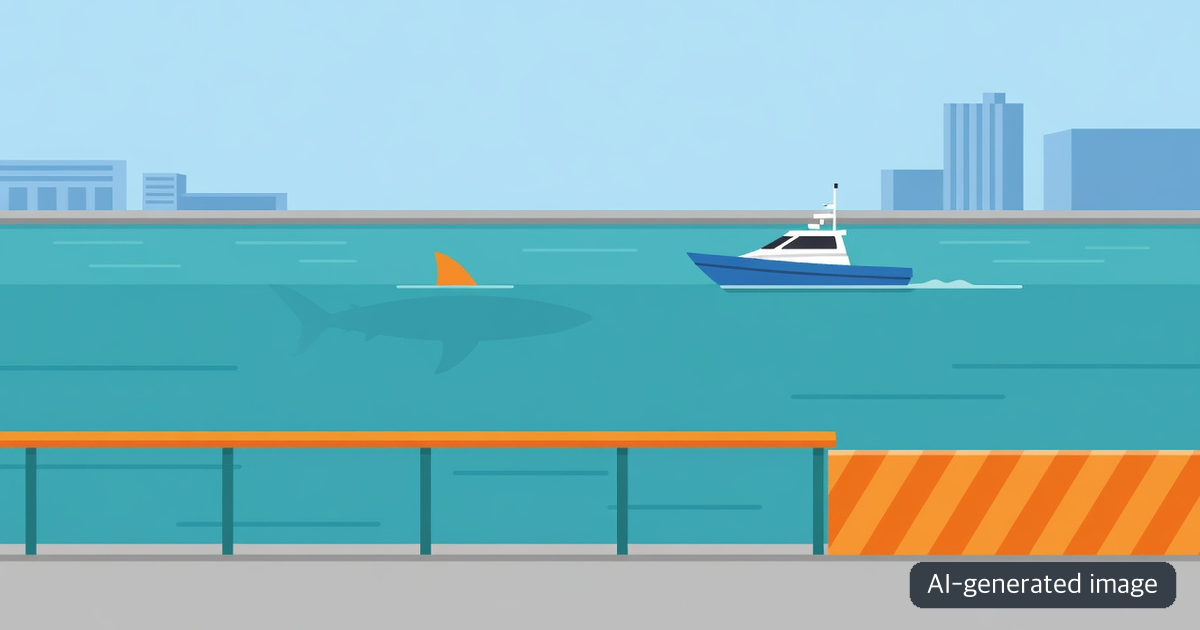
AI-generated safety illustration. It is not an image of Busan North Port or the animal involved. Do not leave the protected promenade or approach the water for a closer look.
Was it the same shark for three days?
That remains unknown. SBS reported that the shark seen on 19 September was believed to be the same type as the animal reported the day before. The report explicitly said authorities could not confirm whether the first shark had remained in the channel or a different individual had entered.
The responsible wording is therefore:
- Supported: “A shark was observed on three consecutive days, 18–20 September.”
- Not supported: “The same bronze whaler was trapped there for three days.”
The species identification is also tentative. No public record reviewed for this article described a specimen examination or genetic confirmation.
Is a bronze whaler dangerous?
In a June 2026 safety release, the National Institute of Fisheries Science included bronze whalers, shortfin makos and blue sharks among large shark species capable of harming people. A large wild shark should not be approached or provoked.
At the same time, no attack or injury has been confirmed in the North Port incident. These statements are compatible: no attack was reported, but a cautious distance is still required.
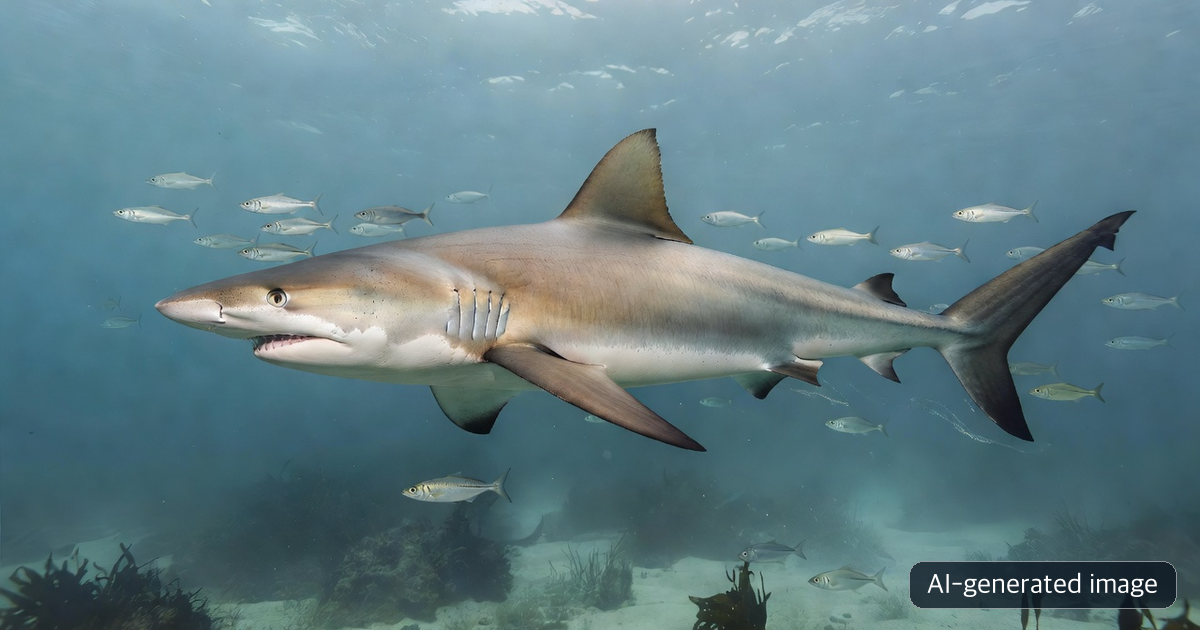
AI-generated representative image. It is not the actual North Port animal, and the reported identification remains tentative.
Did warmer water directly cause this sighting?
That cannot be established for this individual.
A National Institute of Fisheries Science release published in June 2026 provides broader context for Korea’s east coast:
- 46 large-shark occurrence records from January through June 2026;
- 12 in the same period a year earlier, making 2026 3.8 times higher;
- average east-coast surface temperature of 16.3°C in April–June 2026;
- 1.1°C above the long-term norm and 1.9°C above the previous year; and
- an analysis linking increased occurrences to warmer water and the expanded distribution of prey such as mackerel and Pacific bluefin tuna.
These are regional east-coast data, not a tracking study of the Busan animal. SBS reported that it may have followed prey into the channel, but a possibility is not proof of a single cause.
What to do if a shark is seen
- If you are in the water, leave calmly and immediately.
- Stay behind the railing and away from the water’s edge.
- Do not feed, touch or throw objects at the animal.
- Do not follow it closely by boat, paddleboard or drone.
- Report the precise location, time and direction of travel to the Coast Guard or local authorities.
- Follow safety alerts, announcements and on-site restrictions.
- Do not circulate an unconfirmed species, size or attack claim as fact.
The fisheries institute’s general guidance is to leave the water immediately and notify the relevant authorities when a shark is observed.
Confirmed versus unresolved
| Status | Statement |
|---|---|
| Confirmed | Shark observations in the North Port waterfront channel on 18–20 Sep |
| Confirmed | First report about 08:57 on 18 Sep; another about 13:05 on 19 Sep |
| Confirmed report | Brown exterior, approximately 3–4 m |
| Tentative | Bronze-whaler identification |
| Unresolved | Whether all observations involved the same individual |
| Unresolved | The single, direct reason it entered the channel |
| Not confirmed | Capture, attack or human injury |
One animal’s appearance cannot prove that the North Port ecosystem has become healthier, nor that all Busan waters have become dangerous. Such conclusions would require long-term evidence on water quality, prey and biodiversity.
The useful response is neither panic nor a sightseeing rush. Keep a safe distance, do not provoke the animal, follow authorities’ directions and share only verified information.
Checked: 20 September 2026 KST
About the Author
Life Table of Contents Editorial Team
References
- HelloTV News, Shark appears in an urban waterfront channel in Busan (18 Sep 2026)
- SBS News, Shark appears again; caution urged near the promenade (19 Sep 2026)
- Newsis, 3.5 m shark observed at Busan waterfront park (20 Sep 2026)
- National Institute of Fisheries Science, Summer marine-safety warning as east-coast shark occurrences increase (24 Jun 2026)
- Read the Naver version